This guide explains:
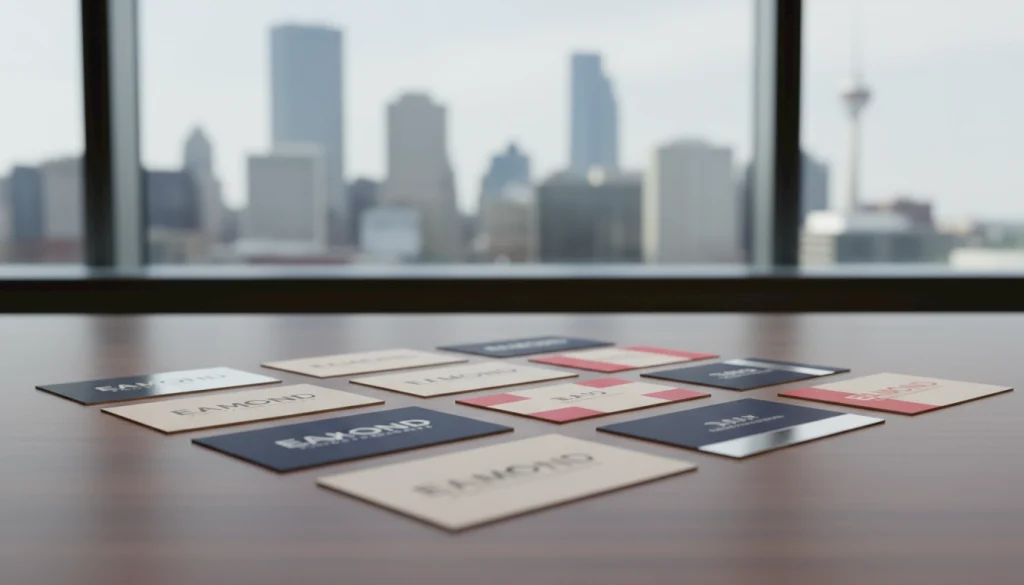
A business card often creates the first tangible impression between a business and a potential client. In Edmonton’s competitive business environment, a well-designed business card helps establish credibility, reinforce brand identity, and support long term relationship building. Whether an entrepreneur operates in Old Strathcona, downtown Edmonton, or West Edmonton, a thoughtfully designed card remains a practical and effective networking tool.
This guide explains how Edmonton business owners can design business cards that support professional growth and leave a lasting impression.
Digital tools continue to shape modern networking, but business cards remain relevant across industries. Professionals still rely on physical cards because they provide immediate value in face-to-face interactions.
Business cards matter because they:
For Edmonton entrepreneurs, a business card often acts as a visual reminder of both professionalism and regional roots.
Every business card should present essential details clearly and legibly. These typically include:
Clear information ensures recipients can easily reconnect after an initial meeting.
Typography strongly influences how a business appears to potential clients. Clean, readable fonts support clarity and trust.
Best practices include:
Text sizing should prioritize names first, followed by company information and contact details that remain easy to read at a glance.
Color selection should align with both brand identity and industry expectations.
Common approaches include:
Consistent color usage across marketing materials strengthens brand recognition.
Balanced layout improves both appearance and readability. White space helps guide the eye and prevents visual clutter.
Effective layouts typically:
A clean layout signals organization and professionalism.
The physical quality of a business card reflects attention to detail and brand standards.
Paper weight influences how a card feels and how long it lasts. Options range from standard thickness to heavier premium stocks that communicate durability and quality. Specialty papers may support unique branding goals when used intentionally.
Different finishes affect both appearance and usability.
Common finishes include:
Each finish should support the card’s purpose and target audience.
Many design issues reduce effectiveness and lead to cards being overlooked or discarded.
Common mistakes include:
Avoiding these errors improves both usability and perception.
Local identity matters to many Edmonton customers. Business cards can subtly reinforce this connection through:
Local relevance helps build familiarity and trust.
Different networking settings call for different design approaches. Professional events often favor conservative designs, while creative or community events allow more expressive layouts. Understanding where cards will circulate helps guide design choices.
A structured design process improves results and reduces costly revisions.
Business owners should prioritize essential information and determine what matters most to their audience.
Researching industry standards and gathering inspiration helps clarify design direction before production begins.
Designs may be created internally, commissioned from professionals, or developed using templates. Regardless of approach, clarity and consistency remain critical.
Before full production, reviewing proofs ensures accuracy. Checking spelling, contact details, and color accuracy helps prevent long-term errors.
Several trends continue to shape modern business card design:
Trends should enhance function rather than distract from essential information.
A business card remains a practical and powerful marketing tool that supports professional credibility, networking effectiveness, and local connection. Even in a digital age, exchanging a well-designed card creates a tangible reminder of your brand that recipients can hold, reference, and share. When designed with intention, clarity, and quality materials, a business card continues to play a meaningful role in business development for Edmonton entrepreneurs looking to build trust and stay top of mind with clients, partners, and prospects.
Strong design choices help ensure that a first impression lasts well beyond the initial introduction. From thoughtful layout and legible typography to strategic use of colour and contact information, every element contributes to how your business is perceived. For those looking to elevate their printed branding, the ultimate guide to business card design for Edmonton entrepreneurs offers practical insights and tips that make your cards more memorable and effective. By combining aesthetic appeal with purposeful communication, your business cards become small but strategic assets in your overall marketing plan.